Morocco is more relaxed about dress than people expect and less relaxed than the beach photos suggest. Here is what actually works, for men and women, in every region and season.
Two things are true at once about dress in Morocco. Nobody is going to stop you wearing shorts, and covering your shoulders and knees in a medina will noticeably improve your day. Morocco is a Muslim country with a modest public dress culture that is also used to visitors, and the practical goal is not compliance but comfort: blending in slightly reduces attention and hassle considerably, especially for women.
The one rule worth remembering
Shoulders and knees covered in medinas, rural areas and religious sites. Everything else is contextual. Beach resorts, hotel pools and modern districts like Gueliz in Marrakech are relaxed; the old cities and villages are not.
For women
What works well
Loose trousers, wide-leg or linen. Cooler than you expect and the single most useful item.
Midi and maxi dresses and skirts, below the knee.
T-shirts and blouses with sleeves, or short sleeves. Loose rather than tight is more comfortable in heat anyway.
A light long-sleeved shirt as a layer — sun protection by day, warmth in the evening, and a cover-up when needed.
A large scarf. The most versatile thing in your bag: shoulders, head in the sun, mosque courtyards, dust in the desert, and a layer on a cold bus.
What to reconsider
Short shorts, crop tops, low-cut tops and very tight clothing in medinas and villages. Not forbidden, and you will see visitors wearing them; it simply attracts attention you would rather not have.
Very sheer fabrics.
Do I need a headscarf?
No. Non-Muslim women are not expected to cover their hair anywhere in Morocco, including at the Hassan II Mosque in Casablanca, though a scarf over the head is appreciated inside it and useful in rural areas and very traditional towns like Moulay Idriss.
At the beach and pool
Swimwear and bikinis are normal at hotel pools, riad terraces, beach clubs and tourist beaches in Agadir and Essaouira. Cover up to walk to and from, and be more conservative on non-tourist local beaches.
For men
Long lightweight trousers or chinos. What Moroccan men wear, and better in the sun than shorts.
T-shirts or short-sleeved shirts. Entirely fine.
Knee-length shorts are acceptable in tourist areas and at the coast but unusual in medinas and rural villages. Above-the-knee shorts read as beachwear.
Avoid going shirtless anywhere except a pool or a beach.
A light long-sleeved shirt for sun and evenings.
Men face far less scrutiny than women, but the same logic applies: long trousers in a Fes medina simply fit better than swim shorts.
By region
Medinas (Marrakech, Fes, Meknes): the most conservative places you will spend time. Shoulders and knees, comfortable walking shoes for uneven cobbles.
Modern districts (Gueliz, Hivernage, Casablanca, Rabat): European in feel. Wear what you like.
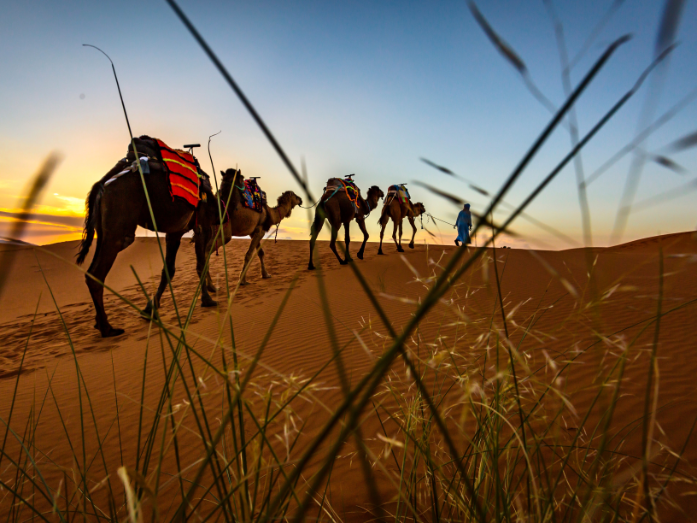
Sahara: long trousers for camel riding (not negotiable if you want comfortable inner thighs), long sleeves against the sun, a scarf for sand, and a warm jacket for the night.
Atlas Mountains: significantly cooler — Imlil runs 10–15°C below Marrakech. Proper walking shoes, layers, a fleece, and a hat and gloves in winter. Villages are traditional; dress modestly.
Coast (Essaouira, Agadir, Taghazout): relaxed and windy. Essaouira in particular is 5–10°C cooler than the interior and needs a windproof layer in every month.
Chefchaouen and the Rif: cool, damp, cobbled and steep. Waterproof and grippy shoes.
Packing list
Clothing (for a 7–10 day trip)
3–4 loose trousers or long skirts
5–6 tops with sleeves
1 light long-sleeved shirt (sun and evenings)
1 warm layer — fleece or jumper
1 jacket. A proper one from October to April; a windproof otherwise
1 large scarf, more if you like them
Swimwear
Sleepwear warm enough for an unheated riad in winter
Smart-casual outfit for a rooftop dinner or a Hivernage bar
Footwear
Closed walking shoes with grip — the most important item. Medina cobbles, gorge floors, dune edges.
Sandals for the riad, the beach and hot afternoons
Flip-flops for shared bathrooms at a desert camp and for hammams
Walking boots only if you are trekking properly
Essentials
Sunscreen, high factor — strong sun year round in the south
Sunglasses and a wide-brimmed hat
Reusable water bottle
Head torch (desert camps, dark medina lanes)
Power bank — camp electricity is solar and evening-only
Universal adapter (Morocco uses European two-pin, 220V)
Small daypack
Cash in dirhams, in small notes
Basic medical kit: rehydration salts, anti-diarrhoeal, plasters, painkillers, motion-sickness tablets for the mountain passes
Hand sanitiser and tissues — public toilets often have neither
A small overnight bag for the desert camp, separate from your main luggage
Seasonal adjustments
Summer (June–August): loosest, lightest natural fabrics. Linen and cotton over synthetics. A hat is not optional. Still bring one layer for air conditioning and coastal evenings.
Winter (December–February): a real jacket, thermal base layer for a desert camp, warm socks, a hat and gloves. Riads are often unheated; ask before booking.
Spring and autumn: layers. Mornings and evenings are cool, afternoons warm.
Ramadan: dress slightly more conservatively than usual as a courtesy, and avoid eating or drinking visibly in the street during fasting hours.
Buy it there
If you under-pack, the souks solve it cheaply: cotton tunics, linen trousers, scarves, leather babouche slippers and wool blankets are all local specialities and better value than at home. A shesh (long desert scarf) bought in Rissani or Merzouga for the equivalent of a few euros is genuinely the most useful thing you will buy on the trip.
Ask us what your trip needs
What to pack depends heavily on where you are going and when — a January desert camp and a July beach week need almost opposite bags. Tell us your itinerary and we will send you a specific list, or browse our multi-day Morocco tours.
No. Non-Muslim women are not expected to cover their hair anywhere in Morocco, including inside the Hassan II Mosque in Casablanca, although a scarf over the head is appreciated there and useful in very traditional towns like Moulay Idriss.
Can I wear shorts in Morocco?
In tourist areas, modern districts and at the coast, yes. In medinas and rural villages, knee-length shorts are tolerated but unusual, and shorter ones read as beachwear. Long lightweight trousers are more comfortable in the sun anyway and attract far less attention.
What should I wear for a camel ride in the desert?
Long trousers, closed shoes and a scarf for your head and face. Shorts against a camel blanket cause chafing within about 20 minutes, and it is the most common regret people report. Bring a warm layer for after sunset in any season from October to April.
What is the most important thing to pack for Morocco?
Closed walking shoes with good grip. You will cover uneven medina cobbles, gorge floors, dune edges and steep village lanes, often all in one trip. After that, a large scarf, which serves as sun protection, a shoulder cover, a dust mask and an extra layer.
Do I need warm clothes in Morocco?
Yes, in almost every season. Desert nights are cold from October to April and can approach freezing in January, the Atlas runs 10 to 15 degrees below Marrakech, Essaouira is windy year round, and many riads have no heating. Bring at least one proper jacket.
