Best Riads in Marrakech for Every Budget
A riad is the best way to stay in Marrakech, and choosing one badly is the most common accommodation mistake visitors make. Here is what to look for at every budget.


A riad is the best way to stay in Marrakech, and choosing one badly is the most common accommodation mistake visitors make. Here is what to look for at every budget.
A riad is a traditional Moroccan house built inward around a central courtyard, usually with a fountain or plunge pool, orange trees, rooms opening onto galleries, and a roof terrace. Converted into guesthouses, they typically have six to twelve rooms. Staying in one is the best accommodation decision you can make in Marrakech — the experience is nothing like a hotel, and the value at the mid-range is genuinely exceptional.
Rather than list specific properties, which change hands and standards constantly, this guide explains how to choose. Get these decisions right and any riad in your budget will be good.
The practical rule: ask how far the riad is from the nearest point a taxi can reach. Five minutes on foot is fine. Fifteen minutes through unlit lanes with luggage is not, especially on arrival.
Simple guesthouses and hostels, some of them genuinely charming. Expect a clean private double with a shared or small en-suite bathroom, a courtyard, a roof terrace and breakfast. Often no heating and no air conditioning; hot water may be limited to certain hours. At this level, prioritise reviews about cleanliness and hot water over decor.
This is where Marrakech is remarkable. Expect a properly restored house, six to ten rooms, a plunge pool in the courtyard, air conditioning, a good roof terrace, excellent breakfast, dinner on request and staff who look after you. This tier is better value in Marrakech than almost anywhere in the Mediterranean.
Larger rooms or suites, a heated pool, a hammam on site, a bar or wine list, a chef rather than a cook, and a concierge who arranges everything. Still cheaper than the European equivalent.
Riads where the restoration is museum quality, rooms are suites, there is a spa, and service is immaculate and discreet. Also the high-end Palmeraie resorts if you want grounds and a big pool. At this level, decide whether you want medina atmosphere or resort space — they are different holidays.
On a week-long trip with a desert excursion, most people book one riad for the nights before and after. That works, and a good riad will store your main luggage while you are in the desert at no charge — ask, and pack a small overnight bag separately.
We work with riads across every budget in Marrakech and know which ones are actually quiet, actually heated and actually easy to find. Because we book them regularly, we can also usually get you a better room than a booking site will. Tell us your budget, dates and what matters to you and we will recommend two or three, or see our multi-day Morocco tours, which include accommodation.
Marrakech
From € 30.00 based on 7 person This price is based on 7 travelers. Price varies for different group sizes.
A riad is a traditional house built inward around a central courtyard, usually with a fountain or plunge pool and a roof terrace, converted into a guesthouse with six to twelve rooms. Because they face inward they are very quiet, and with so few rooms the service is personal in a way a hotel cannot match.
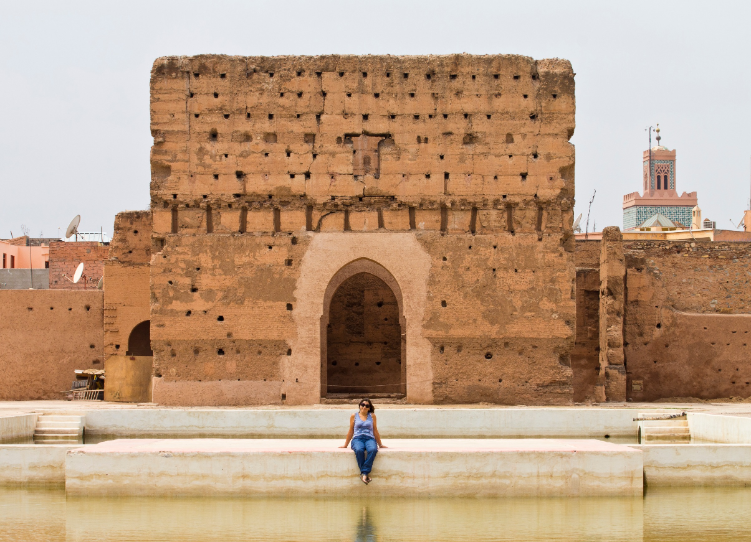
For most visitors, the south medina near Bahia Palace, the Kasbah and the Mellah: calmer than the centre, close to the main monuments, easy taxi access and ten to fifteen minutes' walk to Jemaa el-Fnaa. Dar el Bacha and Mouassine are more central and busier; Gueliz is modern and convenient but outside the old city.
Not always, and this is the most common winter complaint. Ask explicitly before booking between November and March, since air conditioning does not always heat and a stone courtyard house in January is genuinely cold. Many riads will supply a portable heater on request.
Often not ideal. Riads typically have steep narrow stairs, open galleries around a courtyard drop and unfenced plunge pools. With toddlers, either check these points specifically or choose a hotel with a fenced pool and a lift.
Yes, for your arrival at least. Vehicles cannot enter the medina, so a taxi drops you at the nearest gate and you walk the rest with luggage through unnamed lanes. A good riad will meet you at the gate or send a porter with a handcart if you ask.


