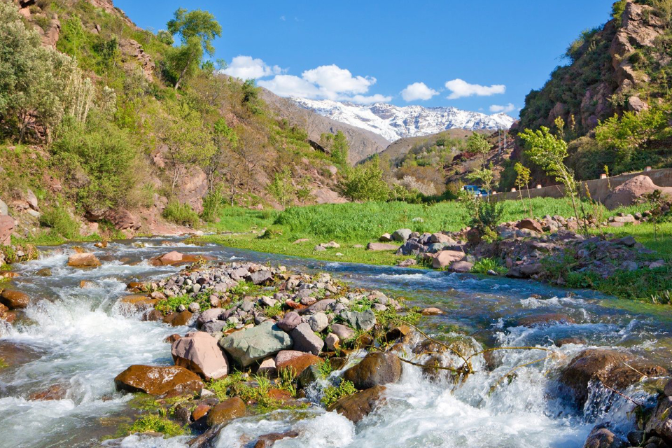
The Ourika Valley is the easiest escape from Marrakech: an hour's drive into the High Atlas for a river, waterfalls and Berber villages. Here is how to do it well rather than as a tourist conveyor belt.
An hour south of Marrakech the plain runs out and the High Atlas begins. The Ourika river cuts a green valley up into it, lined with terraced plots, walnut trees and villages of stone and earth. It is the closest real mountain landscape to the city, which makes it the most popular day trip from Marrakech — and, on a Sunday in April, the busiest. Done right it is a genuinely lovely day; done badly it is a queue for a waterfall.
What the valley actually offers
Ourika is not one destination but a road with several, and which ones you pick decides what kind of day you have.
Setti Fatma and the seven waterfalls — the classic stop at the head of the valley, about 65 km from Marrakech. A scramble up the riverbed reaches the first cascade in 30–45 minutes; the rest take considerably longer.
Berber village and home visits — several families along the valley receive visitors for tea, bread baking and a look at how a mountain house is built. The good versions of this are a highlight; the bad versions are a sales pitch. Ask your operator whose house you are visiting.
Argan and herb cooperatives — women’s cooperatives press argan oil and blend herbal remedies. Worth 20 minutes and a purchase if the cooperative is genuine.
Riverside restaurants — tables set on platforms literally over the water, grilled meat and tagine. Simple and very pleasant in warm weather.
Lalla Takerkoust lake — a reservoir on a different road out of Marrakech, often combined with Ourika. Kayaking, paragliding and lakeside lunches.
Tahnaout, Asni and the Kik Plateau — the road toward Imlil, with big views and far fewer people.
The Setti Fatma waterfall hike, realistically
This is the part most descriptions gloss over. From the village you cross the river on plank bridges and scramble up a rocky course to the first of seven cascades. It is not a graded path: it involves boulder-hopping, some hands-on scrambling and wet rock. The first fall takes 30 to 45 minutes each way for a reasonably fit person. Reaching the higher ones is a half-day of proper walking.
Notes that matter:
Wear grippy closed shoes. Trainers minimum. People do this in flip-flops and people get hurt doing this in flip-flops.
Expect to be offered help. Local lads offer a hand over the awkward sections and expect a tip. If you want a guide, agree the price at the bottom, in dirhams, before you start.
The first cascade is the busiest point in the valley on weekends and holidays. Going early transforms it.
After heavy rain the river rises fast. If local people say don’t cross, don’t cross.
Skip it if you want quiet. The walk up the valley floor below Setti Fatma, or the Kik Plateau, gives better scenery with a fraction of the people.
A good day, hour by hour
08:30 — leave Marrakech. Early departure is the single biggest improvement you can make to this trip.
09:15 — first stop: an argan cooperative or a viewpoint over the valley mouth.
10:00 — Berber house visit: tea, bread, a look at the terraces and irrigation.
11:00 — Setti Fatma. Walk to the first waterfall before the crowds thicken.
13:00 — lunch at a riverside restaurant.
14:30 — a slow drive back with stops for photographs, or a detour to Lalla Takerkoust.
17:00 — back in Marrakech.
That leaves the evening intact, which is why Ourika works well on a first or last full day.
When to go
March–May — the best months. Snowmelt makes the river and falls full, the valley is green, almond and cherry blossom in early spring.
June–August — Ourika is 8–10°C cooler than Marrakech, which is exactly why Marrakchis go there at weekends. Beautiful, but go on a weekday and go early.
September–November — quiet, warm, clear. An underrated window.
December–February — cold and sometimes snowy on the tops, with low water in the falls. Lovely for the views, less so for the hike.
Whatever the month, avoid Sundays and Moroccan public holidays if you can. This is a domestic weekend destination as much as a tourist one.
What to bring
Closed shoes with grip — the one non-negotiable.
A layer. The valley is meaningfully cooler than the city and more so in the shade.
Cash in small dirham notes for entry to houses, tips, tea and lunch.
Water and sunscreen.
Swimwear in summer if you want to sit in the river, which many people do.
Ourika or the Atlas villages?
If your priority is a waterfall and a short, easy day, Ourika. If it is mountain scenery and walking, take the Imlil and Toubkal valley road instead — it is a similar distance, considerably grander, and far less busy. Many people do both across a week.
From € 40.00
based on 7 personThis price is based on 7 travelers. Price varies for different group sizes.
Frequently Asked Questions
How far is the Ourika Valley from Marrakech?
Setti Fatma, at the head of the valley, is about 65 km from Marrakech and takes roughly an hour to an hour and fifteen minutes by car. The lower valley starts within about 45 minutes of the city.
How hard is the Setti Fatma waterfall hike?
The first of the seven cascades takes 30 to 45 minutes each way over boulders and wet rock, with some hands-on scrambling and plank river crossings. It is not a graded path. Closed shoes with grip are essential; the higher falls are a half-day walk.
When is the best time to visit the Ourika Valley?
March to May is best: snowmelt fills the river and waterfalls and the valley is green. September to November is quiet and clear. In summer the valley is 8 to 10 degrees cooler than Marrakech, which makes it popular with locals at weekends.
Should I avoid any particular days?
Sundays and Moroccan public holidays. Ourika is a domestic weekend destination as well as a tourist one, and Setti Fatma in particular gets very crowded. A weekday departure before 09:00 changes the trip completely.
Is Ourika better than the Imlil and Toubkal valley?
They serve different purposes. Ourika is closer, easier and has the waterfalls; Imlil has grander mountain scenery, proper walking and far fewer visitors. If you want a short easy day take Ourika, if you want the mountains take Imlil.