Camel Trekking in Merzouga: Everything You Need to Know
The camel trek into Erg Chebbi is the image that sells Morocco. Here is what the ride is actually like — duration, comfort, what to wear, welfare questions and the alternatives.


The camel trek into Erg Chebbi is the image that sells Morocco. Here is what the ride is actually like — duration, comfort, what to wear, welfare questions and the alternatives.
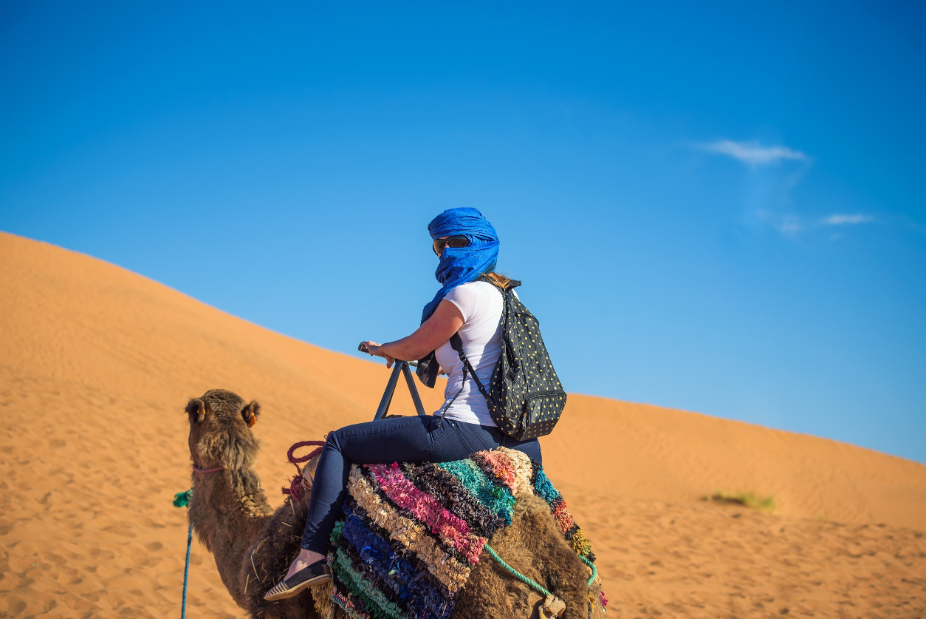
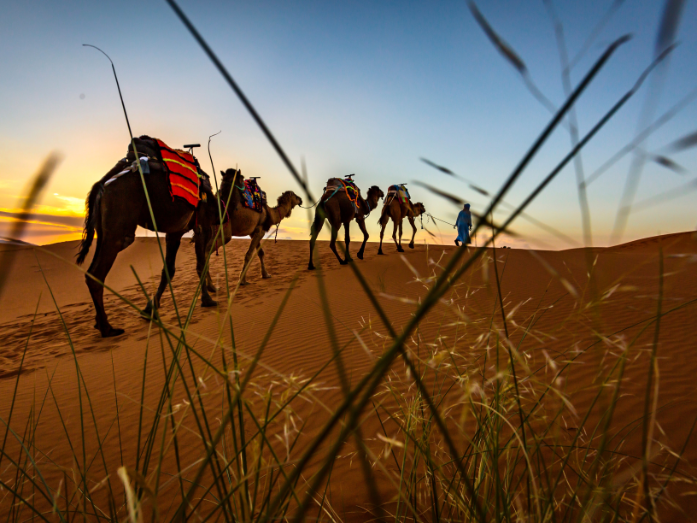
The camel trek into the dunes at Merzouga is the single most photographed moment of any Morocco trip: a line of camels on a crest, long shadows, orange sand. It is also the part people know least about before they do it. Here is a plain account of what happens, what it feels like, and what to do if riding is not for you.
Treks leave from the edge of Erg Chebbi outside Merzouga village, typically around 90 minutes before sunset. You leave your main luggage at a hotel or with the camp transfer and take only a small overnight bag, which is strapped to a camel or carried by the camp 4x4.
A camel handler leads a string of camels on foot — camels are not steered by the rider. You mount while the camel is kneeling, hold the front pommel firmly, and lean back as it stands: that rise is the most alarming two seconds of the whole trek and it is over quickly. The walk to camp takes 60 to 90 minutes, usually with a stop on a high dune for sunset. In the morning the reverse trip is shorter, often 30 to 45 minutes, and colder.
It is fine for most people and uncomfortable for some. The saddle is a padded blanket arrangement over a wooden frame; the gait is a slow side-to-side roll. After about 40 minutes, inner thighs and lower back start to notice. People who ride horses regularly tend to find it easy; people with existing back or hip problems often do not.
Practical things that help:
Say so when you book — there is no awkwardness about it and no extra charge with any reputable operator. Every camp in Erg Chebbi is reachable by 4x4, which takes about 15 to 20 minutes and can stop on a dune for the same sunset. This is the right choice if you are pregnant, have back or joint problems, are travelling with small children, or simply do not want to ride an animal.
A good middle path: take the 4x4 to camp and do a short 15-minute camel ride on the dunes the next morning, purely for the experience and the photograph. Many families end up doing exactly this.
Camels here are working animals and most are well kept, because a healthy camel is an owner’s livelihood. Standards do vary, though, and it is fair to look. Signs of a well-run operation:
If something looks wrong, you are entitled to decline and take the 4x4. Tell your operator why; that feedback is what changes standards. We use a small number of handlers we know personally and we will happily tell you who they are.
October to April is ideal: warm afternoons, cool evenings. Winter treks are perfectly pleasant in daylight but bring a real jacket for the evening and the dawn return. From June to August the middle of the day regularly passes 45°C, so treks run only at dawn and dusk and camps are quieter.
The camel trek is included on all of our Erg Chebbi itineraries, with the 4x4 alternative always available at no extra cost. See the 5-day private luxury Merzouga tour for the unhurried version, or the 2-day Zagora trip if time is short. Questions about mobility, children or welfare? Just ask us — we would rather adjust the plan than have you endure it.
Marrakech
From € 385.00 based on 7 person This price is based on 7 travelers. Price varies for different group sizes.
Marrakech
From € 140.00 based on 7 person This price is based on 7 travelers. Price varies for different group sizes.
About 60 to 90 minutes from the edge of the dunes to camp, usually with a stop on a high crest for sunset. The return in the morning is shorter, often 30 to 45 minutes.
It is uncomfortable rather than painful for most people, with inner thighs and lower back noticing after about 40 minutes. Long trousers make the biggest difference. If you have existing back or hip problems, take the 4x4 transfer instead.
Yes. Every camp in Erg Chebbi is reachable by 4x4 in 15 to 20 minutes, and any reputable operator arranges this at no extra charge. Many people take the 4x4 to camp and do a short camel ride the next morning instead.
Most camels are working animals in good condition because their health is their owner's livelihood, but standards vary. Look for padded saddles without rub sores, alert animals, handlers walking rather than riding, and no treks in the midday heat. You can always decline and take the 4x4.
Long trousers, closed shoes, a scarf for your head and face, and a warm layer for after sunset. Avoid shorts, sandals and anything you need both hands to hold on to.


