Moroccan Food Guide: 15 Dishes You Must Try
Moroccan food is more varied than the tagine-and-couscous version most visitors meet. These are the fifteen dishes worth going out of your way for, and where to find each.


Moroccan food is more varied than the tagine-and-couscous version most visitors meet. These are the fifteen dishes worth going out of your way for, and where to find each.
Moroccan cooking draws on Amazigh, Arab, Andalusian, Ottoman and West African traditions, and it is built on a handful of techniques — slow braising, layering of sweet and savoury, and generous use of preserved lemon, olives, saffron, cumin and ras el hanout. The version most visitors encounter is a narrow slice of it. Here are fifteen dishes worth seeking out.
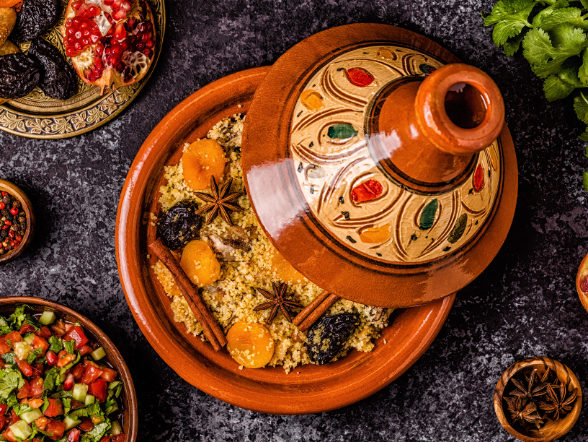
Not one dish but a method: slow cooking in a conical earthenware pot that returns condensation to the food. The classics are lamb with prunes and almonds (sweet, festive), chicken with preserved lemon and olives (the most refined), kefta mkaouara (meatballs in spiced tomato with an egg cracked in), and vegetable tagine, which is genuinely good rather than an afterthought. Eat it with bread, not cutlery.
Traditionally a Friday dish, served after midday prayers, and still made that way in most households. Proper couscous is steamed three times over the broth until the grains are separate and light — nothing like the instant version. Usually served with seven vegetables and lamb or chicken, sometimes with a sweet onion-and-raisin tfaya. If you are in Morocco on a Friday, eat couscous.
Marrakech’s own dish and the one most visitors miss. Beef or lamb with preserved lemon, cumin, garlic and saffron sealed in a clay urn and cooked for hours in the ashes of a hammam furnace. Traditionally a men’s dish, prepared at home and taken to the hammam to cook. Deeply savoury and falling apart. Ask for it specifically in Marrakech.
Whole lamb slow-roasted in an earth pit or clay oven until the skin crisps and the meat pulls away. Sold by weight, eaten with bread, cumin and salt. There is a row of mechoui stalls near Jemaa el-Fnaa; go at lunchtime.
Shredded msemen or day-old bread soaked in a lentil-and-fenugreek broth with chicken, heavily spiced with ras el hanout. Traditionally served to new mothers. Rarely on tourist menus — a riad or home kitchen is where you will find it, and it is worth asking.
The most astonishing thing in Moroccan cooking: layers of paper-thin warqa pastry around shredded pigeon or chicken cooked with eggs, almonds, cinnamon and sugar, dusted with icing sugar on top. Sweet and savoury at once. There is also a seafood version, which is excellent and much less traditional.
Grilled skewers of spiced minced lamb (kefta) and lamb sausage (merguez), cooked over charcoal and eaten in bread with harissa and tomato. The staple of Moroccan street eating, and one of the best-value meals anywhere.
Tomato, lentil and chickpea soup with vermicelli and coriander, finished with lemon. The soup that breaks the fast every evening of Ramadan, and available year round. Cheap, ubiquitous and genuinely good.
A thick split-pea or broad-bean purée with olive oil, cumin and paprika, eaten for breakfast in winter with bread. A working person’s dish, sold from small stalls, and one of the cheapest things you will eat.
Not one salad but a spread of small cooked and raw dishes served together: zaalouk (smoky aubergine and tomato), taktouka (grilled pepper and tomato), carrot with cumin and orange, beetroot, and chickpeas. Order a selection as a starter; it is often the best part of the meal.
The two great Moroccan breakfast breads. Msemen is a laminated, square, flaky flatbread, layered with butter and folded. Baghrir is a semolina pancake covered in tiny holes — the “thousand-hole pancake” — which soaks up butter and honey. Both from street stalls in the morning.
Sold from cauldrons on Jemaa el-Fnaa in a broth of thyme, aniseed, liquorice root and other herbs. You pick them out with a pin and drink the broth afterwards, which is the point — it is regarded as good for colds. More pleasant than it sounds, and cheap.
Morocco is one of the world’s largest sardine exporters and they are superb here. Either grilled whole at a port stall in Essaouira or Agadir, or as sardine mchermla — butterflied, stuffed with chermoula herb paste, and fried.
Green gunpowder tea with a fistful of fresh mint and a great deal of sugar, poured from height to aerate it. It is not a drink so much as a social institution, offered constantly and refused only with difficulty. You can ask for it with less sugar (bla sukar for none), and a seller offering you tea is being hospitable, not obligating you to buy.
Chebakia — sesame-and-honey flower-shaped pastries, essential during Ramadan. Kaab el ghazal (“gazelle horns”) — crescents of almond paste in thin pastry. Sellou — a dense roasted flour, almond and sesame paste, energy-rich and unlike anything else. Amlou — argan oil, almond and honey spread, the Moroccan answer to nut butter, from the Essaouira–Agadir region.
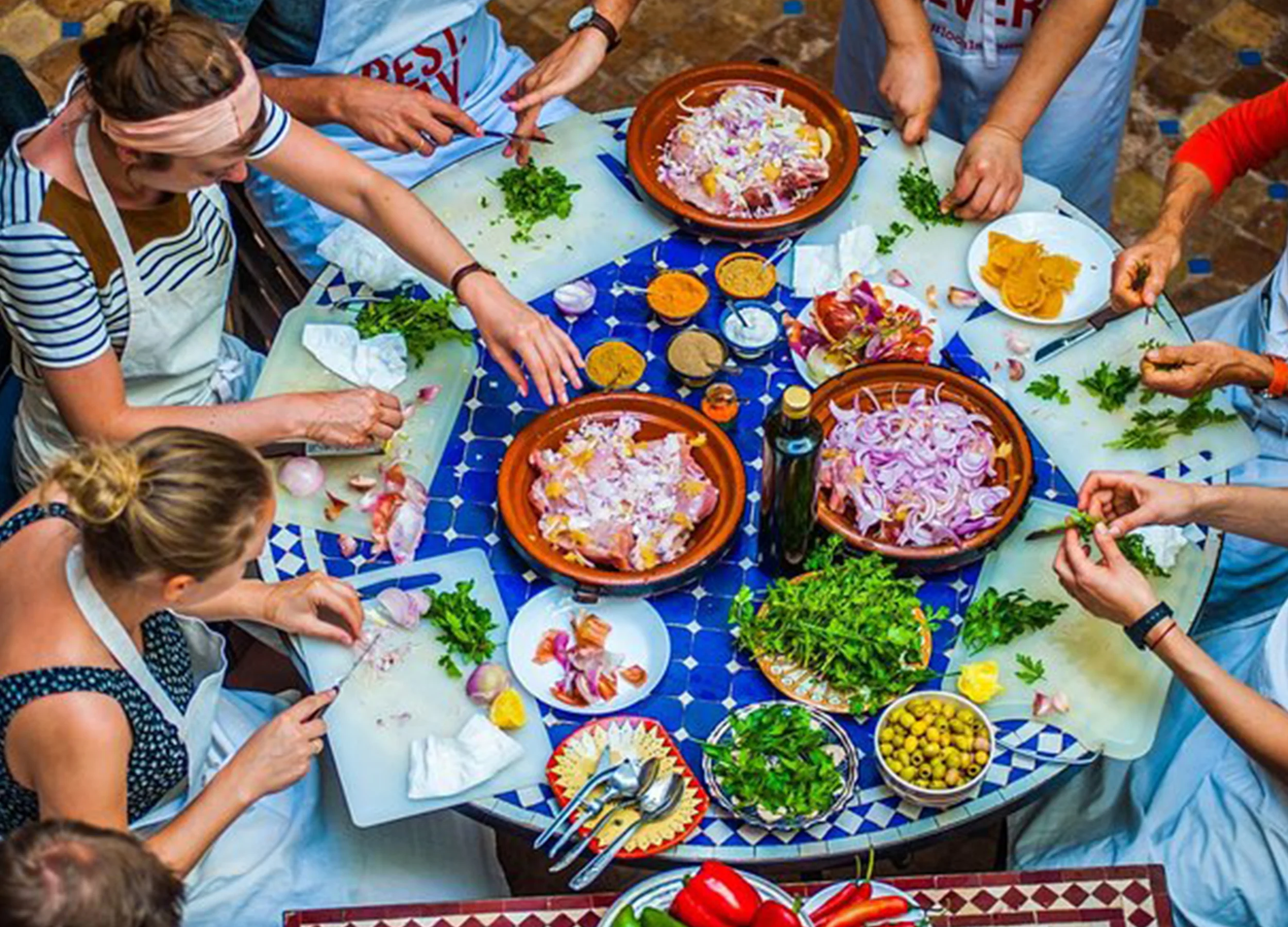
The best way to understand Moroccan food is to make it. A class typically starts with a market walk — which teaches you more about spices in an hour than a week of eating out — then a tagine, salads and bread from scratch, then lunch. Our Marrakech cooking class runs in a riad kitchen with a local cook, and our 7-day Morocco food tour builds a whole trip around regional cooking, from Marrakech to the Sahara.
Tell us if food is the point of your trip and we will build the itinerary around it.
Marrakech
From € 789.87 based on 7 person This price is based on 7 travelers. Price varies for different group sizes.
Marrakech
From € 65.00 based on 7 person This price is based on 7 travelers. Price varies for different group sizes.
Couscous is the most emblematic, traditionally made on Fridays and steamed three times over the broth so the grains stay separate. Tagine is more of a method than a dish, covering dozens of slow-braised combinations, and is what most visitors eat most often.
Tanjia is a Marrakech speciality: beef or lamb with preserved lemon, cumin, garlic and saffron sealed in a clay urn and cooked for hours in the ashes of a hammam furnace. A tagine is cooked in a conical pot over direct heat. Tanjia is deeper and more savoury, and you usually have to ask for it.
Yes, at busy stalls with high turnover, which is most of them. The rule is to eat where locals eat. Raw salads washed in tap water cause more upset stomachs than grilled meat does, so be a little more cautious with those in the first few days.
Vegetarians eat very well: vegetable tagine, couscous, the cooked salad spread, bissara, msemen and harira are all widely available. Vegans should specify no butter, honey or eggs, and check that broths are vegetable rather than meat based.
A layered pie of paper-thin warqa pastry around shredded pigeon or chicken cooked with eggs, almonds and cinnamon, dusted with icing sugar so it is sweet and savoury at once. It is the most remarkable dish in Moroccan cooking and there is also an excellent seafood version.


